



Why Inventory Tracking Still Fails in Facility Management (And How to Fix It)
A pump fails on a Monday morning. The facility management (FM) team responds quickly, but the repair is delayed when the system shows a spare part is available while the physical shelf is empty.
Technicians begin checking WhatsApp messages, old spreadsheets, and multiple storage locations to locate the part. During this delay, water pressure drops, tenant complaints escalate, and contractors remain on standby without progress.
In most facility operations, the issue is not the equipment failure itself, but the gap between recorded inventory and actual on-ground stock.
The Operational Costs of Poor Inventory Tracking

When spare parts cannot be located accurately, what should be a two-hour repair can turn into days of downtime. Without reliable stock data, facility teams are forced to initiate urgent procurement at higher cost and longer lead times.
This challenge is common across commercial buildings, shopping malls, industrial facilities, and residential developments where inventory is still managed through spreadsheets, manual logs, or disconnected systems.
Why Manual Inventory Tracking Breaks Down
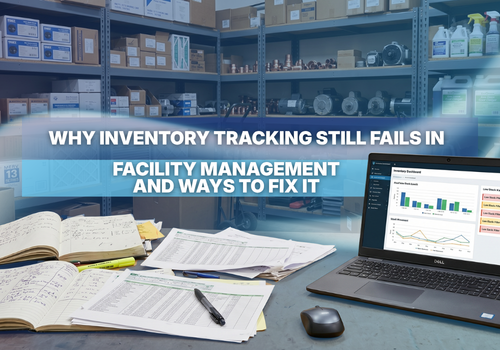
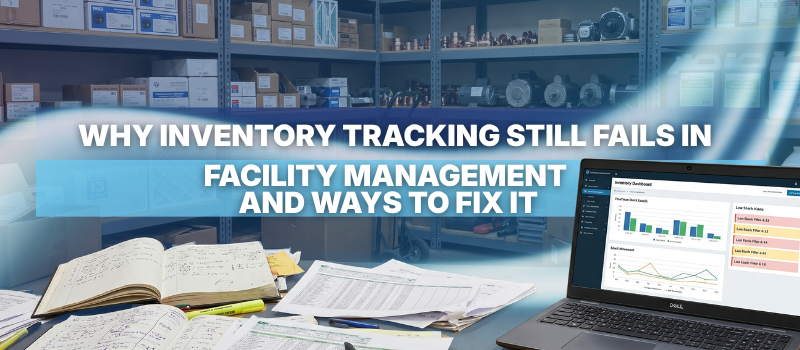
Relying on physical logbooks and shared spreadsheets for stock tracking often leads to compounding data errors. During breakdown situations, technicians prioritise restoring operations over updating records. As a result, stock movements are often delayed in documentation or missed entirely.
Over time, this creates a gap between recorded data and physical inventory. When multiple supervisors rely on separate spreadsheets or informal checks, stock accuracy becomes inconsistent and requires frequent physical verification.
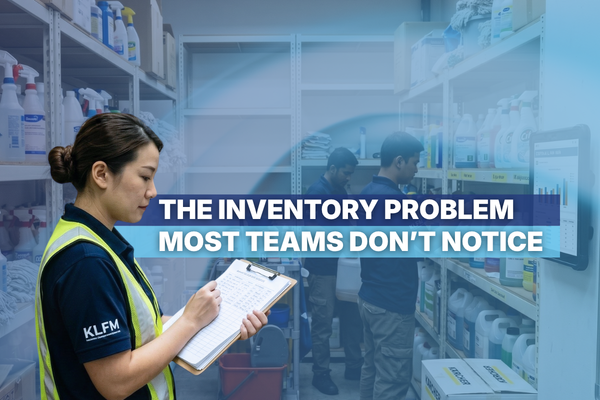
Interview insight: Daniel Lim (pseudonym), a former cleaning operations supervisor at a major commercial property in Kuala Lumpur, explained that, without a CMMS, some teams may request more cleaning chemicals than they need, while others borrow supplies from another team because the storeroom is too far away. The person managing the storeroom may also forget to update the stock list and later has to rush to reconcile the quantities.
These informal requests, cross-team transfers, and delayed updates make it difficult to identify actual consumption by team, site, or task. An unusually high usage figure may reflect genuine operational demand, over-requesting, unrecorded borrowing, or an outdated stock balance.
This affects operations in two key areas:
-
Critical Spare Parts: Components such as pump systems, HVAC units, and generator spares require accurate tracking because even a single missing item can delay full system restoration.
-
Everyday Consumables: Items such as cleaning materials, filters, and maintenance supplies are often consumed across teams without consistent logging, especially when storerooms are not centrally managed or easily accessible.
How Inventory Inaccuracy Impacts Budget Planning
Inventory management directly affects operational budgets. Without clear usage history and consumption data, managers struggle to forecast purchasing needs accurately, often leading to two costly outcomes:
-
Over-Ordering: Capital is tied up in excess stock that sits unused for months, increasing storage requirements and reducing cash flow flexibility.
-
Under-Ordering: Unexpected stock shortages force emergency purchases, expedited shipping fees, and reactive procurement decisions that increase operating costs.
In contrast, facility teams with predictable reorder patterns and consistent historical data can negotiate better supplier agreements, secure volume discounts, and reduce lead times and properly execute long-term asset lifecycle management.
Harnessing this power of data in facility management is what separates reactive maintenance teams from proactive facility operations.
How ServeDeck Facility Management Software Streamlines Inventory
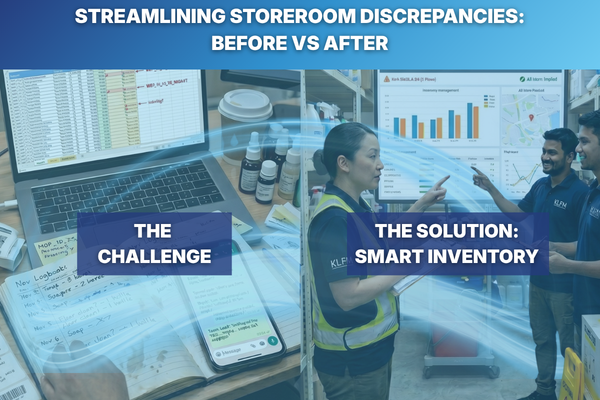
For facility teams managing multiple assets, vendors, and service requests, a modern facility management platform connects work orders, inventory usage, procurement workflows, and reporting into a single system. This ensures stock movements are recorded automatically as maintenance work is completed.
ServeDeck’s Inventory Management solution is designed around real Facility Management workflows, helping teams maintain control of stock levels while improving operational efficiency.
|
Feature |
How We Solve the Pain Point |
|
Real-Time Digital Visibility |
Management and technicians check live stock levels instantly via the web platform or mobile app, reducing unnecessary physical checks. |
|
Direct Work Order Integration |
Technicians can allocate and request spare parts directly within active work orders, automatically updating inventory records. |
|
Automated Low-Stock Alerts |
Custom inventory thresholds trigger alerts before shortages occur, giving managers time to reorder. |
|
Connected Procurement Workflow |
Reaching a reorder point automatically generates a Purchase Requisition and routes it through the digital approval process. |
|
Audit-Ready Stock Takes |
Inventory cut-off functionality allows accurate physical counts and reliable stock reporting. |
Who Benefits from Better Inventory Management
Effective inventory management creates value across multiple operational roles:
-
Building managers who need faster issue resolution
-
Facility managers who need accurate stock visibility
-
Technicians who need the right parts to complete work orders
-
Procurement teams who need better purchasing control
-
Finance teams who need more accurate budgeting
-
Head office teams managing multiple properties
It is also particularly beneficial for commercial buildings, shopping malls, hotels, residential strata developments, and organisations managing multiple facilities.
Scalable Inventory Solutions for Multi-Site Properties
Inventory tracking challenges increase with property size.
Anonymised operational data from a managed property portfolio illustrates the scale of inventory management in facility operations. At individual site level, inventory may range from approximately 500 to more than 6,000 items, covering critical spare parts, maintenance components, cleaning supplies and frequently used consumables.
Across a portfolio of 10 buildings, even minor recording errors, untracked stock movements and outdated inventory records can quickly accumulate, reducing inventory visibility and making purchasing decisions, stock forecasting and consumption analysis more difficult.
A centralised facility management system allows multi-site property management firms to monitor portfolio-wide consumption patterns, identify usage anomalies, and standardise procurement across all buildings instead of managing separate spreadsheets.
If your process still relies on physical logbooks, manual spreadsheet reconciliation, or WhatsApp verification, upgrading to a digital system improves operational efficiency.
To learn how ServeDeck's Inventory Management module can help improve inventory control and operational efficiency, request a free demonstration and see the platform in action.
SHARE THIS POST:
Comments (0)
Leave a Reply
Your email address will not be published. Required fields are marked *